

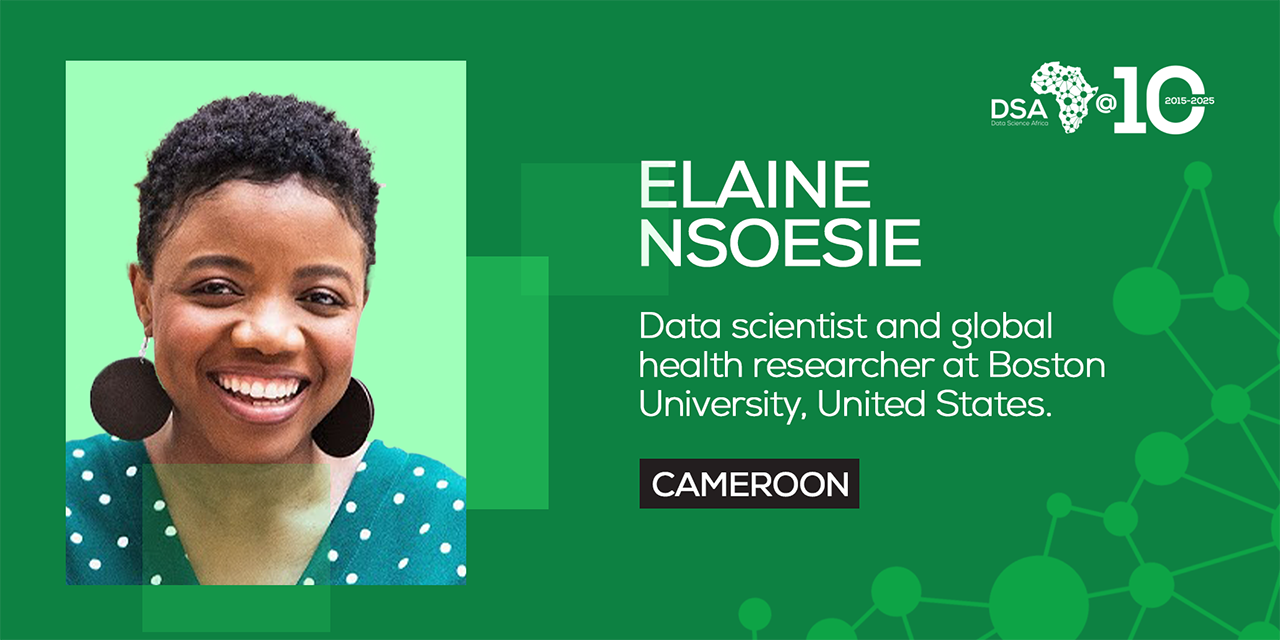
I first heard about Data Science Africa (DSA) through a friend, Dr. Sekou Remy, who thought I’d find the community interesting. At the time, I was searching for spaces that aligned with my interests. Sekou, who was then at IBM, introduced me to DSA and mentioned they were planning an event in Abuja.
I reached out, introduced myself, and soon got a reply from Martin, who was helping organize the conference. He said they had two teaching slots open – one on data visualization and one on statistical inference. I picked data visualization because, well, it sounded easier. The funny thing is, I’d never taught it before.
So, I spent the next few weeks buried in resources, learning everything I could. I’d always been fascinated by visualization, how data becomes a story, but now I have to teach it. I built my slides, practiced endlessly, and went to Abuja. That experience completely changed me. And I never stopped going to DSA after that.
What struck me most about DSA wasn’t just the technical content, but the people. I met participants who had only attended once or twice and were already teaching new sessions. The train-the-trainer model was powerful. It showed me that you don’t have to know everything to give back. That spirit of openness stayed with me.
My session on data visualization went surprisingly well. In fact, people liked it so much that I was later invited by the United Nations Development Programme (UNDP) to train staff from national statistical offices across Africa. It was an unexpected but deeply rewarding outcome – a direct link between a single DSA workshop and a much wider impact.
But the most lasting impact, for me, was community. When I first arrived, I didn’t know a soul. But connections grew naturally over dinners, late-night chats, and shared problem-solving. I’ve since met those same people again at other conferences. There’s always at least one person from DSA in the room. That’s the kind of network that sustains your work and your spirit.
DSA also inspired me to rethink how I approached my own initiatives. I run a program called Rethé, a scientific writing and mentorship platform for African researchers. I started it years ago during graduate school, but it didn’t quite take off then. After attending DSA, I began to see how to build it ethically and collaboratively – the DSA way.
DSA’s model – working with local partners in each country rather than just showing up – helped me shape Rethé into something more sustainable. Now, every Rethé program happens in collaboration with African institutions. Together, we design writing resources and mentorship tailored to what researchers actually need.
Our latest project is a partnership between Rethé and DSA: the Data Science for Women’s Health Fellowship. We’ve just wrapped up the first cohort with 20 women researchers from West and Central Africa. They’ve been trained in data science methods, scientific writing, and publication skills. Many have already submitted or published papers. We’re now preparing for the second cohort, focused on women from Southern and Eastern Africa.
One of the proudest milestones for me at DSA was the first women-focused DSA event we organized in 2021. It brought in the highest number of women participants the community had ever seen. That proved something important: when we’re intentional about inclusion, it works.
DSA means one thing above all: community. It’s a rare space where hierarchy melts away. Professors with decades of experience sit beside students just discovering data science, and everyone learns from each other.
That spirit – of teaching before you’re ready, of lifting others as you climb – is what keeps me coming back.