

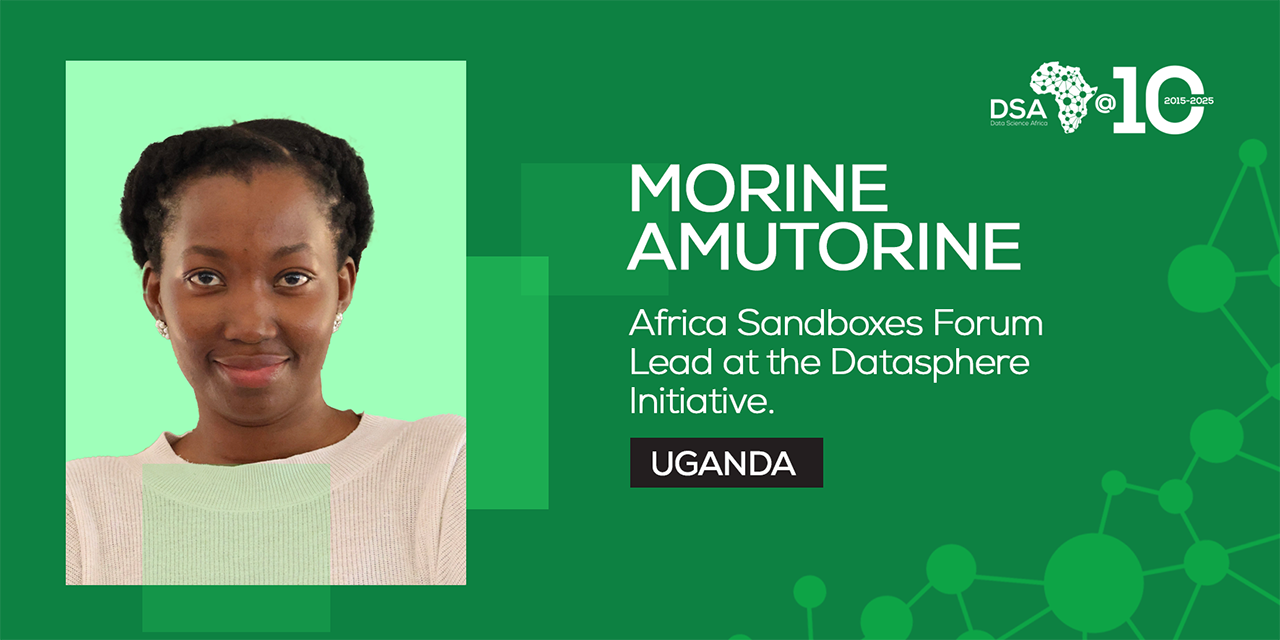
When I started out, I was just a software engineer trying to write cleaner code. Data, policy, AI weren’t part of my plan. But life has a way of changing direction and for me, that turn began with Data Science Africa (DSA).
Back in 2016, I joined the UN Global Pulse – Pulse Lab Kampala as a software developer. My job was to build web interfaces for data visualizations created by data scientists. I didn’t think much about the data itself. But working alongside them, I became fascinated by what they could uncover, like how a few lines of code could reveal what people were talking about, worrying about, or hoping for.
My supervisor, who was part of DSA, told me we were attending a DSA workshop in Arusha, Tanzania. I didn’t know much about DSA. But I was just excited to travel – my first flight ever. But before we left, he told me that I’ll be training people on how to clean and label data. I panicked. I’d never led a training session in my life. But I prepared hard and as I taught others at the workshop, I learned even more myself.
Through DSA, I grew from writing code to building models and teaching others how to analyze data. But something started to bother me: the dashboards and visualizations we created rarely led to real change. Policymakers would look at the graphs, nod, and move on. I realized the problem wasn’t just the data, but it was how we communicated it.
That question — how do we make data make sense to decision-makers? — shaped my next chapter. With encouragement from my DSA mentors, I began exploring the intersection of data and policy. My DSA research fellowship under the advisership of Prof. Neil Lawrence and Jessica Montgomery of the Accelerate Programme for Scientific Discovery propelled me into active roles in data governance. Today, I lead the Africa Sandboxes Forum, helping regulators and innovators collaborate to create an enabling environment for ethical AI and responsible data use.
All of this traces back to DSA. And I’ve come to believe that community is the secret ingredient of Africa’s tech revolution. We build faster, stronger, and fairer when we build together. Now, I try to pay it forward. I teach younger data scientists to engage in research at the intersection of data science and policy and bring them into projects when opportunities arise.
DSA is like a big brother — it looks out for you, even before you realize what you need. And now, I want to do the same for others because that’s what DSA really does: it doesn’t just build skills. It builds people.