

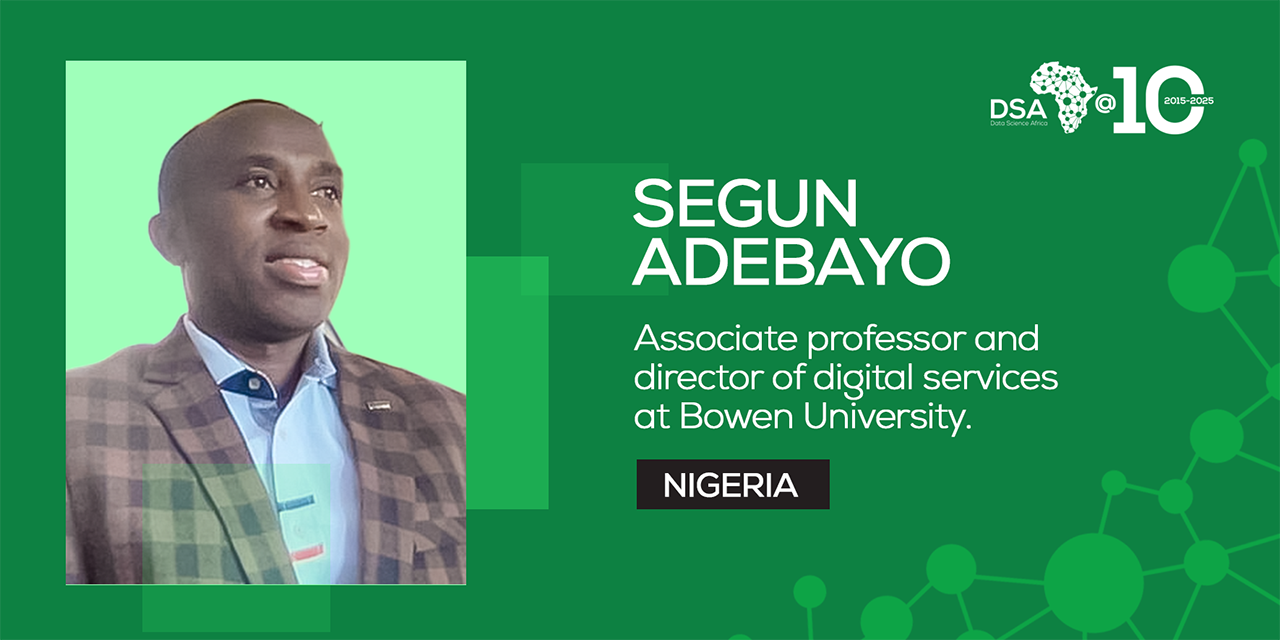
I work as a researcher at Bowen University in Nigeria, specializing in electrical and electronics engineering and AI. When I started my PhD in 2015, I was fascinated by how AI could be applied to improve agricultural productivity and over the years, my research has expanded into robotics and applied AI.
I first heard about Data Science Africa (DSA) in 2019, when a friend returned from the DSA conference in Ghana and shared stories of amazing research happening across the continent. In 2020, I participated in an online DSA conference and was captivated by presentations on AI applications in agriculture. This inspired my team and I to apply for a DSA grant, which we were fortunate to receive. The grant marked the beginning of a project that has been both fascinating and impactful.
At Bowen University, we have millions of fruit bats on campus. Despite abundant food, they migrate every evening, and we wanted to understand where and why. Using AI and signal processing, we tracked their movements over six months. We discovered that pregnant females travel further than males, and certain forested areas attract repeated visits. These findings have been exciting, and we’ve presented our work at several conferences across Africa.
Beyond the grant, DSA has greatly strengthened my skills and research network. The online training, seminars, and networking opportunities exposed me to emerging fields like TinyML and transformed both my research and teaching. One important lesson I’ve learned is the value of collaboration: young researchers shouldn’t stay isolated in their labs. Interacting with peers across Africa sharpens thinking, expands horizons, and opens doors.
DSA is a community that opens your horizon and helps you see beyond where you are. From tracking bats in Nigeria to connecting with researchers across the continent, my journey with DSA has shown me the power of mentorship, collaboration, and innovation. It’s been one grant, one training, and one inspired researcher at a time.